Corsets to Conscience: How Britain's Historical Romance Revival is Sparking an Artisan Revolution
From Screen to Shopping Basket
It's Sunday evening, you've just finished another episode of your favourite period drama, and suddenly your IKEA cushions look rather tragic. Sound familiar? You're not alone. Britain's romance with historical costume dramas has reached fever pitch, and it's fundamentally changing how we think about beauty, craftsmanship, and the objects we surround ourselves with.
But here's the thing: whilst we're all swooning over hand-embroidered waistcoats and delicate lacework on screen, most of us are satisfying that aesthetic craving with mass-produced knock-offs that exploit the very craftsmanship traditions we're supposedly celebrating.
The Real Romance Behind Handmade
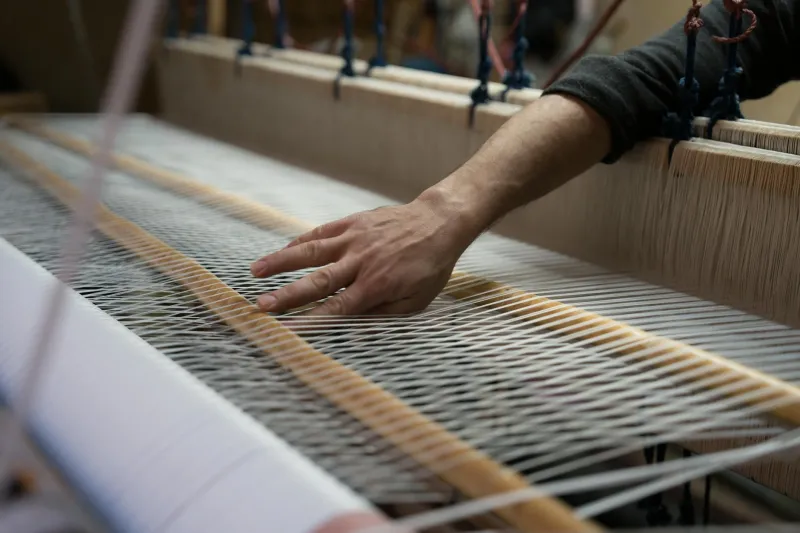
There's something deeply ironic about falling in love with the idea of artisan skill whilst simultaneously buying machine-made 'vintage-style' homeware from retailers who've never met the people making their products. The romance we're really responding to isn't just about Empire waistlines and intricate embroidery—it's about the human touch, the story behind each stitch, the knowledge passed down through generations.
Fair trade artisans across the world are keeping these traditions alive, from hand-block printed textiles in Rajasthan to intricate metalwork in Peru. When you choose their products, you're not just buying something beautiful—you're ensuring these skills survive another generation.
Beyond the High Street Imitation Game
Walk into any major retailer today and you'll find shelves groaning with 'artisan-inspired' products. Embossed metalware that's never seen a craftsperson's hammer. 'Hand-painted' ceramics churned out by machines. Textiles with 'traditional patterns' designed by algorithms rather than inherited through cultural memory.
The difference between authentic and imitation isn't just about quality—it's about impact. When you buy that £15 'vintage-style' mirror from a high street chain, your money disappears into corporate profits and manufacturing costs. When you invest in a hand-crafted mirror from a fair trade cooperative, you're directly supporting a family, preserving traditional skills, and often contributing to community development projects.
The Aesthetic of Ethics
Here's what the period drama producers understand that many retailers don't: authentic craftsmanship has a quality that simply cannot be replicated by mass production. The slight irregularities in hand-thrown pottery. The way natural dyes create subtle variations in colour. The patina that develops on genuinely hand-forged metal.
These aren't flaws—they're signatures of human involvement. And increasingly, British consumers are developing the eye to spot the difference.
Your Period Drama Shopping Strategy
Transforming your Bridgerton obsession into ethical action doesn't require a trust fund. Start with one room, one corner, one surface. That occasional table crying out for something beautiful? Instead of hitting the high street, spend an afternoon researching fair trade home accessories online.
Look for organisations like Traidcraft, Shared Earth, or Oxfam's fair trade range. Many stock exquisite handwoven textiles, carved wooden items, and metalwork that would make any period drama set designer weep with joy. Yes, you might pay £40 for a throw instead of £15, but you're buying something that will age beautifully rather than fall apart after six months.
The Dinner Party Revolution
Nothing says 'I have exquisite taste' quite like serving afternoon tea on genuinely hand-painted ceramics whilst explaining how your purchase supported a women's cooperative in Guatemala. Your guests get to admire beautiful objects with fascinating stories, and you get to feel good about every penny spent.
Fair trade organisations often provide detailed information about the artisans behind each piece. Frame these stories. Make them part of your home's narrative. Your sitting room becomes a gallery of global craftsmanship rather than a shrine to mass production.
Gifts That Tell Stories
Period dramas have reminded us that the most memorable gifts are those with meaning behind them. A hand-embroidered cushion cover carries infinitely more emotional weight than something picked up during a rushed lunch break at John Lewis.
When you're buying for someone who shares your appreciation for beautiful things, fair trade gifts allow you to give both aesthetic pleasure and moral satisfaction. The recipient gets something gorgeous, you get to feel good about your impact, and an artisan somewhere gets fairly paid for their skill.
The Long Game
The real revolution isn't just about individual purchasing decisions—it's about changing the conversation around what we value. Every time you choose authentic craftsmanship over mass-produced imitation, you're voting for a world where human skill is valued over corporate efficiency.
Period dramas work because they show us worlds where things were made to last, where craftsmanship mattered, where objects carried stories. We don't need to live in the past to embrace those values—we just need to be more thoughtful about where our money goes.
Your sitting room doesn't need to look like a film set, but it can reflect the same appreciation for human creativity and skill. The only difference is that this time, the artisans get paid fairly for their work.