From Boots to Boardrooms: How Britain's Workforce Is Rewriting the Rules of Office Lunch
The £3 Meal Deal Reckoning
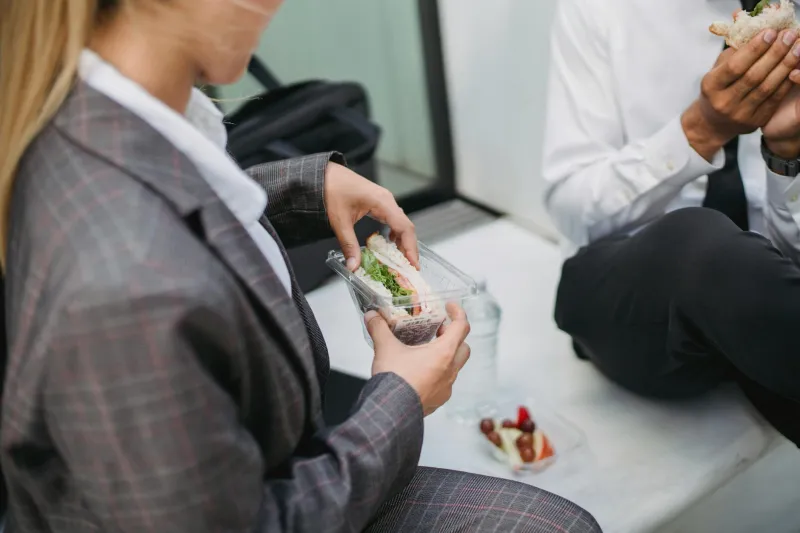
Walk into any British office at 12:30pm and you'll witness a familiar ritual: the great lunch exodus. Workers stream towards the nearest Tesco Metro or Sainsbury's Local, drawn by the siren call of the meal deal. Sandwich, crisps, drink. £3. Done. But increasingly, that well-worn path is being questioned by a growing number of Britain's workforce who've started asking: what if my lunch could do more than just fill me up?
Meet Sarah Chen, a marketing coordinator from Manchester, who made the switch six months ago. "I used to grab the same prawn mayo sandwich combo every single day," she laughs. "Then I started reading about where my food actually comes from. It wasn't guilt that changed my mind – it was curiosity."
Sarah's story reflects a broader shift happening across Britain's workplaces. From the glass towers of Canary Wharf to the converted warehouses of Birmingham's Jewellery Quarter, office workers are discovering that their lunch choices can ripple far beyond their desk drawer.
The Ripple Effect of Daily Choices
Consider this: if you buy lunch five days a week, that's roughly 250 meals a year. Multiply that by Britain's 27 million working population, and suddenly those individual choices become a powerful collective force. When Maria Santos, a coffee farmer in Honduras, sells her beans through fair trade channels, she earns enough to send her daughter to university. That premium you pay for your afternoon flat white? It's helping fund dreams thousands of miles away.
"People underestimate the cumulative power of small, consistent choices," explains Dr. James Wright, an ethical consumption researcher at the University of Leeds. "A worker switching from conventional to fair trade coffee might spend an extra 50p per day, but that £125 annual difference, multiplied across thousands of consumers, transforms entire communities."
The mathematics of impact become even more compelling when you consider the alternatives sprouting up around Britain's business districts. Independent cafés and food vendors are increasingly offering ethically sourced options that rival both the convenience and price of traditional meal deals.
Beyond the Sandwich: Building New Lunch Rituals
Take the approach adopted by the team at a Bristol tech startup. Rather than individual meal deal runs, they've organised weekly group orders from a local supplier who stocks fair trade and organic options. "We discovered we could get better food for roughly the same price," says team leader Priya Patel. "Plus, we actually know where our ingredients come from now."
Their Monday morning ritual now involves browsing suppliers' weekly menus, choosing from options like Ghanaian cocoa brownies, Peruvian quinoa salads, and sandwiches made with fairly traded cheese. The ordering process has become a talking point, with colleagues sharing stories about the producers behind their food.
This shift towards conscious consumption isn't limited to trendy startups. In Leeds, a group of NHS administrators have started a 'Fair Trade Friday' tradition, where they collectively order from suppliers who guarantee ethical sourcing. The initiative has spread across three hospital departments, involving over 200 staff members.
The Practical Revolution
The beauty of this movement lies in its accessibility. You don't need to overhaul your entire lifestyle or spend significantly more money. Small swaps – choosing fair trade bananas over conventional ones, opting for ethically sourced chocolate bars, or seeking out coffee shops that display Fairtrade certification – can seamlessly integrate into existing routines.
London-based accountant David Morrison started with just his morning coffee. "I found a place near the office that does proper fair trade coffee for the same price as the chain next door," he explains. "Six months later, I'm buying my lunch there too, and I know the coffee farmers they work with by name."
The key is starting small and building momentum. Many workers find that once they begin paying attention to sourcing, it becomes second nature. The information is readily available – fair trade certification logos, supplier websites, even QR codes linking to producer stories.
Creating Office Culture Change
Some of the most successful transitions happen when entire teams embrace ethical eating together. A Glasgow marketing agency introduced 'Mindful Monday' lunches, where staff share meals from suppliers who provide transparency about their sourcing. The initiative has strengthened team bonds while supporting ethical producers.
"It's not about being preachy or making people feel bad about their choices," emphasises office manager Karen Stewart. "It's about making ethical options visible and accessible. Once people see they can make a difference without sacrificing convenience or taste, the choice becomes obvious."
The Future of Office Eating
As more British workers discover the connection between their lunch choices and global impact, the landscape of office eating is quietly transforming. Vending machines are stocking fair trade snacks, office coffee services are switching to ethically sourced beans, and workplace canteens are highlighting the stories behind their ingredients.
This isn't about perfection or dramatic lifestyle overhauls. It's about recognising that our daily choices – including something as simple as what we eat for lunch – can be a force for positive change. In offices across Britain, workers are discovering that ethical eating isn't just good for the world; it's also surprisingly good for building workplace community, trying new flavours, and feeling connected to something larger than the 9-to-5 routine.
The revolution is happening one lunch break at a time, proving that sometimes the most powerful changes start with the smallest choices.